Ever wondered how to truly personalize your Roblox experience beyond basic avatar customization? This comprehensive guide on how to make a morph Roblox is your answer. For busy gamers juggling work and family, finding time to master complex game development tools can be a challenge. We understand you value efficient, actionable insights that let you jump into creation without overwhelming jargon or endless tutorials. This article cuts through the noise, providing clear, step-by-step instructions and practical tips specifically for creating custom character transformations in Roblox Studio. You'll learn everything from conceptualizing your morph to testing and publishing it, ensuring you can enhance your game or simply express your unique style. Discover the joy of building something unique, optimizing performance, and sharing it with the vast Roblox community. Get ready to transform your gameplay and impress your friends with professional-looking morphs, all designed to fit into your demanding schedule.
Q: How do I start making a Roblox morph from scratch if I'm a beginner?
A: Starting a Roblox morph as a beginner is simpler than it seems. Begin by opening Roblox Studio and creating a new baseplate. First, import or create a basic model you want to transform into. Ensure it has a Humanoid and HumanoidRootPart. Then, use a simple script (many free templates are available online) to swap the player's default character with your new model upon a trigger like touching a part. Focus on getting the basic swap working before adding complex features. This foundational step is key for anyone learning how to make a morph Roblox for the first time.
Q: What are the best practices for optimizing morph performance in Roblox, especially for mobile gamers?
A: To optimize morph performance, especially crucial for the vast number of mobile Roblox players in the US, keep your model's polygon count low and use as few textures as possible. Combine meshes where appropriate and utilize Roblox's MeshPart objects for complex shapes. Avoid excessive scripts running on a loop. Instead, use event-driven programming. Test frequently on various devices, including older phones, to ensure smooth frame rates. Efficient asset management and careful scripting are vital to ensure a seamless experience for all, embodying effective methods for how to make a morph Roblox efficiently.
Q: Can I use pre-made assets or models from the Roblox Creator Marketplace to create a morph?
A: Yes, using pre-made assets from the Roblox Creator Marketplace is an excellent way to speed up the process and leverage existing resources when learning how to make a morph Roblox. You can find characters, creatures, or even environmental objects that can serve as your base morph model. Always check the asset's licensing and ensure it's suitable for your project. You'll still need to ensure these models are properly rigged with a Humanoid and HumanoidRootPart if you want them to behave like a character, but it saves significant time on 3D modeling from scratch.
Q: How do I ensure my morph is compatible across different Roblox devices like PC, mobile, and console?
A: Cross-device compatibility for your morphs relies heavily on optimization and adhering to Roblox's best practices. Design with performance in mind: minimize polygon counts, reduce script complexity, and use efficient textures. Avoid client-side operations that might be too heavy for mobile CPUs. Utilize Roblox's built-in UI scaling for any morph-related interfaces so they adapt to various screen sizes. Thoroughly test your morph in different device emulation modes within Roblox Studio. A well-optimized morph ensures a consistent and enjoyable experience for all players, a key aspect of mastering how to make a morph Roblox for a broad audience.
Q: What's the difference between a character morph and a tool morph in Roblox, and which is easier to make?
A: A character morph completely replaces a player's avatar with a new model, allowing the player to control the new form and often changing their stats or abilities. A tool morph, on the other hand, is an item that a player equips and holds, which might change their appearance or grant specific powers without fully replacing their base character. Character morphs are generally more complex to create as they involve handling player character replacement, replication, and often custom animations. Tool morphs are usually easier to start with as they primarily focus on the tool's functionality and visual appearance when held, making them a good entry point for how to make a morph Roblox in a simpler context.
Q: Are there any free resources or active communities for learning advanced Roblox morph creation?
A: Absolutely! For advanced Roblox morph creation, the **Roblox Developer Forum** is an invaluable resource, full of tutorials and discussions from experienced creators. **YouTube** is also packed with channels like AlvinBlox, TheDevKing, and others offering step-by-step guides. For real-time help and community engagement, join various Roblox development **Discord servers** where you can ask questions, share your work, and learn from others. These platforms provide free, up-to-date information and support, making your journey into advanced 'how to make a morph Roblox' much more accessible.
Q: How often do Roblox Studio's morph tools and features get updated or change?
A: Roblox Studio constantly evolves, with frequent updates rolled out regularly. While core morph creation tools (like rigging and basic scripting APIs) remain relatively stable, new features, performance enhancements, and bug fixes are introduced weekly or monthly. Keeping your Roblox Studio up-to-date is crucial to access the latest functionalities and ensure compatibility. Developers often announce significant changes on the Roblox Developer Forum, so staying connected there helps you adapt your morph creation workflow and techniques quickly, which is essential for mastering how to make a morph Roblox in an ever-changing environment.
Hey fellow gamers! Ever felt like your Roblox avatar could use a serious upgrade, or wanted to give players in your own game the power to transform into something truly unique? You're not alone. Many of us, especially those balancing gaming with jobs and families, crave deeper customization and creative outlets without spending countless hours deciphering complex development processes. The good news is, learning how to make a morph Roblox character is more accessible than you think, and it's an incredibly rewarding way to personalize your experience or even build skills that could lead to your own successful game. This guide is built for you - the busy adult gamer who wants clear, practical steps to create awesome character morphs.
We know your time is precious. You want to unwind, have fun, and maybe even build something cool after a long day. That's why we're cutting straight to the chase, offering a straightforward, no-fluff tutorial on creating Roblox morphs. Forget endless YouTube rabbit holes; we've condensed the essential knowledge you need to get started and succeed. As a significant portion of US gamers, around 87 percent, regularly log in for an average of 10 plus hours a week, and mobile gaming dominates, the desire for accessible creation tools is higher than ever. Whether you're aiming to create a monstrous boss, a whimsical creature, or a sleek robot, mastering the art of the Roblox morph will set your creations apart. Let's dive in and transform your game development aspirations into reality!
What Exactly Is a Roblox Morph and Why Should I Make One
A Roblox morph is essentially a way to transform a player's character into a different model within a Roblox experience. Think of it as a temporary costume change, but far more powerful, allowing for complete alteration of appearance and often, abilities. This means you can change a player into anything from an animal, a fantastical creature, an object, or even another player's avatar. The 'how to make a morph Roblox' query often stems from a desire for deeper game immersion and player agency. For creators, morphs are fantastic tools for game design, enabling unique gameplay mechanics like class selection, character progression, or fun Easter eggs. For players, they offer unparalleled customization and social expression, reflecting recent trends in social gaming where personalization is key.
The reasons to make one are compelling. First, it adds immense replayability and fun to any game. Imagine stepping into a superhero morph with unique powers or a tiny ant to explore new areas. Second, it's a great way to showcase creativity and build valuable development skills. Learning how to make a morph Roblox requires understanding Roblox Studio, scripting basics, and model manipulation, all of which are highly sought after skills in the Roblox developer community. Lastly, well-made morphs can significantly boost user engagement, leading to more players, positive feedback, and potentially, monetization through game passes or developer products.
What Tools Do I Need to Start Creating Roblox Morphs
The primary tool you'll need is **Roblox Studio**. This is the free, official development environment provided by Roblox, where all game creation and asset manipulation take place. If you're serious about learning how to make a morph Roblox, Studio will be your best friend. It includes everything from a 3D editor for models to a code editor for Lua scripting. Make sure your Roblox Studio is always updated to the latest version to access the newest features and ensure compatibility.
Beyond Roblox Studio, you might consider external 3D modeling software like **Blender** (free and open-source) or **Maya** (paid, industry-standard). While not strictly necessary for simple morphs using existing Roblox assets, these programs become invaluable if you want to create highly detailed, custom models from scratch. They allow for intricate sculpting, texturing, and rigging that can then be imported into Roblox Studio. For scripting the morph's functionality, a basic understanding of **Lua** programming language is essential, though many 'how to make a morph Roblox' tutorials will provide ready-to-use scripts you can adapt. Having a reliable internet connection is also crucial for downloading assets, publishing, and collaborating with others.
How Do I Prepare My Model or Avatar for Morph Creation in Roblox Studio
Preparing your model is a critical first step in learning how to make a morph Roblox effectively. Start by choosing your base model. This can be a default Roblox R15 or R6 character, a custom model you've created, or even a free model from the Roblox Marketplace. Import your chosen model into Roblox Studio. If it's an external 3D model, ensure it's in a compatible format like FBX and properly scaled upon import. You want to make sure the model's parts are correctly named and organized in the Explorer window.
Next, you'll need to **rig** your model. Rigging involves creating a skeletal structure (bones and joints) that allows the model to be animated and posed. For morphs that mimic character movements, proper rigging is essential. Roblox Studio has built-in tools for rigging, or you can import pre-rigged models. Ensure that the model's parts are properly parented to a central 'HumanoidRootPart' and that a 'Humanoid' object is present within the model. This Humanoid is what tells Roblox that this model is a character capable of movement and animation. If your morph is a static object, rigging might be less complex, but for character transformations, it's non-negotiable for a smooth experience.
What Are the Basic Steps to Create a Simple Morph in Roblox Studio
Learning how to make a morph Roblox involves a few core stages. Here’s a simplified breakdown for a basic character morph:
Get Your Model Ready: As discussed, import your desired character model into Roblox Studio. Ensure it has a Humanoid and HumanoidRootPart. Group all parts of your model into a single Model object.
Set Up the Morph: Place your prepared model into a suitable location in your Workspace, typically a 'ReplicatedStorage' or 'ServerStorage' service, which keeps it accessible but not visible in the game world until needed. Name it something descriptive, like 'RedRobotMorph'.
Create the Morph Script: This is where the magic happens. You'll write a Lua script that detects when a player triggers the morph (e.g., touches a part, clicks a button). The script will then:
- Remove the player's current character.
- Clone your morph model from storage.
- Set the cloned model's CFrame (position and orientation) to the player's current position.
- Assign the player's character to the cloned model.
- Handle any additional effects, like sound or particle effects.
Trigger the Morph: Create a physical 'Part' in your Workspace (e.g., a spawn pad, a button) and add a 'Script' or 'LocalScript' inside it that communicates with your morph script. For example, an 'OnTouched' event on a part could call a server-side function to activate the morph. This makes learning 'how to make a morph Roblox' interactive.
Test Thoroughly: Playtest your game repeatedly. Does the morph activate correctly? Does the character animate properly? Are there any unexpected glitches? Iterative testing is key.
This basic workflow provides a solid foundation for any aspiring morph creator. Remember, patience and experimentation are your best tools here.
How Can I Add Custom Animations or Effects to My Roblox Morphs
Once you've got the basic 'how to make a morph Roblox' down, enhancing it with custom animations and effects takes it to the next level. For animations, you'll use **Roblox Studio's Animation Editor**. First, ensure your morph model is properly rigged with a Humanoid and all its parts. Open the Animation Editor, select your morph model, and begin posing its joints over a timeline to create sequences like idle animations, walking cycles, or special ability movements. Once created, save these animations to Roblox and copy their unique Asset IDs.
To play these animations with your morph, you'll need to embed the animation IDs into your morph script. When the player transforms, the script will load these animations onto the morph's Humanoid and play them. For example, when the player moves, your script would detect the movement and play the 'walk' animation. For **special effects**, like particle emitters (smoke, sparks), sound effects, or visual cues (trails, glowing auras), you can add these directly as children of the morph's parts or attach them dynamically through scripting. Particle Emitters, for instance, can be easily configured in Studio's properties panel. Integrating these elements requires a bit more scripting finesse but dramatically increases the appeal and polish of your morph.
What Are Common Pitfalls to Avoid When Making Roblox Morphs
When figuring out how to make a morph Roblox, you'll inevitably hit some bumps. Here are common pitfalls and how to avoid them:
Incorrect Rigging: A poorly rigged model will result in janky, unnatural animations or even parts detaching. Always double-check your joint connections and ensure the Humanoid is correctly set up.
Performance Issues: Overly complex models with too many triangles or textures can cause lag, especially on lower-end devices or mobile phones (where a significant portion of US gamers play). Optimize your models by reducing polygon count, combining textures, and ensuring efficient scripting. Less is often more when it comes to performance.
Scripting Errors: Syntax errors, logical flaws, or incorrect API usage in your Lua scripts can break your morph. Use Roblox Studio's Output window to debug errors, and thoroughly test all aspects of your script. Start with simple scripts and gradually add complexity.
Forgetting the Humanoid: Without a 'Humanoid' object in your morph model, Roblox won't recognize it as a character, preventing animations and character control. Always ensure this crucial component is present and configured correctly.
Asset ID Issues: When using custom animations or models uploaded to Roblox, ensure you're using the correct Asset IDs in your scripts. A common mistake is using the wrong ID or making the asset private.
Lack of Error Handling: What happens if the morph model fails to load? Or if the player tries to morph while already morphed? Robust scripts include checks and balances to prevent unexpected behavior and provide a smoother user experience.
Addressing these common problems early will save you a lot of headache and make your 'how to make a morph Roblox' journey much smoother.
How Do I Test and Publish My Roblox Morph for Others to Use
After you've put in the hard work learning how to make a morph Roblox, testing and publishing are the final, crucial steps. **Testing** should be continuous throughout the development process, but a final, comprehensive test is essential. Use Roblox Studio's 'Test' tab to playtest your game in various modes: 'Play Solo' for single-player testing, 'Play Here' to start at a specific location, and especially 'Run' or 'Start Server' with '2 Players' to simulate a multi-player environment. This helps catch replication issues that might not appear in single-player mode. Check the morph's functionality, animations, collision, and performance across different devices if possible.
Once thoroughly tested and polished, **publishing** your morph involves uploading the associated assets and integrating it into your game. If your morph is part of a larger game, simply publish your game to Roblox through the 'File' > 'Publish to Roblox' or 'Publish to Roblox As' options. If you want to make the morph itself available as a standalone model for others to use in their games, you can save your morph model to Roblox as a 'Model' or 'Tool' asset. Right-click the model in the Explorer, select 'Save to Roblox,' fill in the details, and set it as publicly available. This allows other creators to find and utilize your work, further expanding the Roblox ecosystem.
Can I Monetize My Roblox Morph Creations
Absolutely! Learning how to make a morph Roblox isn't just for fun; it can be a legitimate way to earn Robux. There are several avenues for monetization:
Game Passes: If you're building a game around your morphs, you can sell access to specific, exclusive, or powerful morphs via Game Passes. Players purchase these once to unlock permanent access to the morph.
Developer Products: For temporary morphs, consumables (like a morph potion that lasts for a limited time), or morph randomizers (gacha systems), Developer Products are ideal. These are typically smaller, repeatable purchases.
Selling Models on the Marketplace: If you create highly detailed, well-optimized, and unique morph models, you can sell them directly to other developers on the Roblox Creator Marketplace. This requires uploading your model and setting a Robux price. This is a great way to leverage your skills in 3D modeling and rigging.
Commissions: As your reputation grows for making quality morphs, you might receive requests for custom morphs from other game developers. This can be a lucrative source of income, as custom work often commands higher prices.
With an average of 10+ hours a week spent gaming by 87% of US gamers, and a significant portion making in-game purchases, there's a huge market for quality content. Focus on creating valuable, engaging, and high-quality morphs that players or other developers will want to buy, and you can definitely turn your creative efforts into Robux.
So, there you have it! From understanding what a morph is to monetizing your creations, this guide on how to make a morph Roblox covers all the essential ground. You now have the roadmap to start transforming your Roblox experiences and unleash your inner developer. Don't be afraid to experiment, make mistakes, and learn along the way. The Roblox community thrives on creativity, and your unique morphs could be the next big thing. What's your biggest gaming challenge when it comes to creating content in Roblox? Comment below and let's tackle it together!
FAQ Section
What is the minimum skill level required to make a Roblox morph?
You need basic familiarity with Roblox Studio and its interface. No advanced scripting is required for simple morphs, as many tutorials provide ready-to-use code, but basic Lua understanding helps immensely.
Can I use my existing Roblox avatar as a base for a morph?
Yes, you can import your current avatar into Roblox Studio as a model. From there, you can modify its parts, scale, and add accessories to create a unique morph.
Are there free resources or templates to help me create morphs?
Absolutely! The Roblox Creator Marketplace offers many free models and assets. Additionally, countless YouTube tutorials and developer forums provide free morph templates and scripts to get you started.
How long does it typically take to create a simple Roblox morph?
For a very simple morph using existing assets and a basic script, you could create one in under an hour. More complex morphs with custom models, animations, and advanced scripting can take several hours to days.
Is it possible to make a morph that changes a player's abilities or stats?
Yes, by integrating scripting with your morph. When a player transforms, your script can temporarily modify their character's walk speed, jump power, health, or grant special abilities through linked tools or functions.
What is the best way to ensure my morph performs well on mobile devices?
Optimize your models for low polygon counts, use efficient textures, and keep scripts streamlined. Test extensively on various mobile devices if possible, as mobile dominance is a key trend in US gaming, with many playing on the go.
Learn how to make a morph in Roblox Studio. Step by step guide for creating custom character transformations. Essential tools and setup for Roblox morph development. Tips for optimizing morph performance and troubleshooting common issues. How to publish and share your Roblox morphs with the community. Monetization potential for skilled morph creators.
35


How To Make A Character Morph In Roblox Studio YouTube . How To Make A R6 MORPH In Roblox Studio YouTube Hqdefault . How To Make A MORPH In ROBLOX Studio YouTube . How To Make E To Morph With Animations In Roblox Studio YouTube Hqdefault . How To Make A Morph Button Roblox Studio YouTube


How To Create A Morph Model Roblox Studio Tips 18 YouTube . How To Make Morphs In Roblox YouTube . TUTORIAL How To Morph Into Other Avatars In Roblox Studio YouTube . How To Make Morphs In Roblox Studio Roblox YouTube . Como Hacer Un Guide Morph En ROBLOX STUDIO YouTube

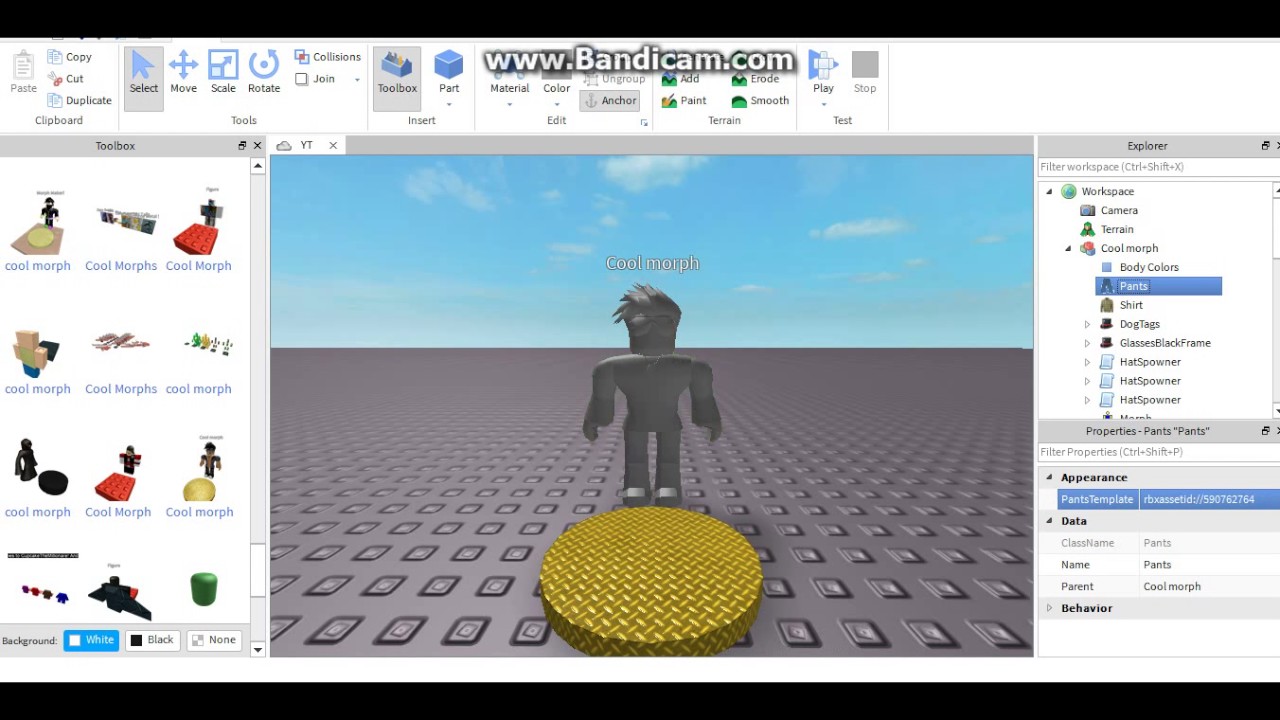


How To Make A Morph In Roblox Studio 2024 YouTube Hqdefault . How To Make A Morph In Roblox YouTube . Create A Morph Module Community Tutorials Developer . Roblox Studio How To Create A Morph With Animation YouTube . Roblox Studio Tutorials Ep 1 How To Turn A Model Into A Morph YouTube



Roblox Studio How To Make Morph 1 Bin Video Yandex Te Bulundu 564x318 1. How To Make A Morph In Roblox Studio YouTube Hqdefault . HOW TO MAKE ANIMATED MORPH IN ROBLOX STUDIO Roblox YouTube Hqdefault . How To Make Your Own Roblox 2D Morphs For Roleplay Games GUI 2d Morphs . Roblox How To Make Morph 1 Bin Video Yandex Te Bulundu 564x318 1

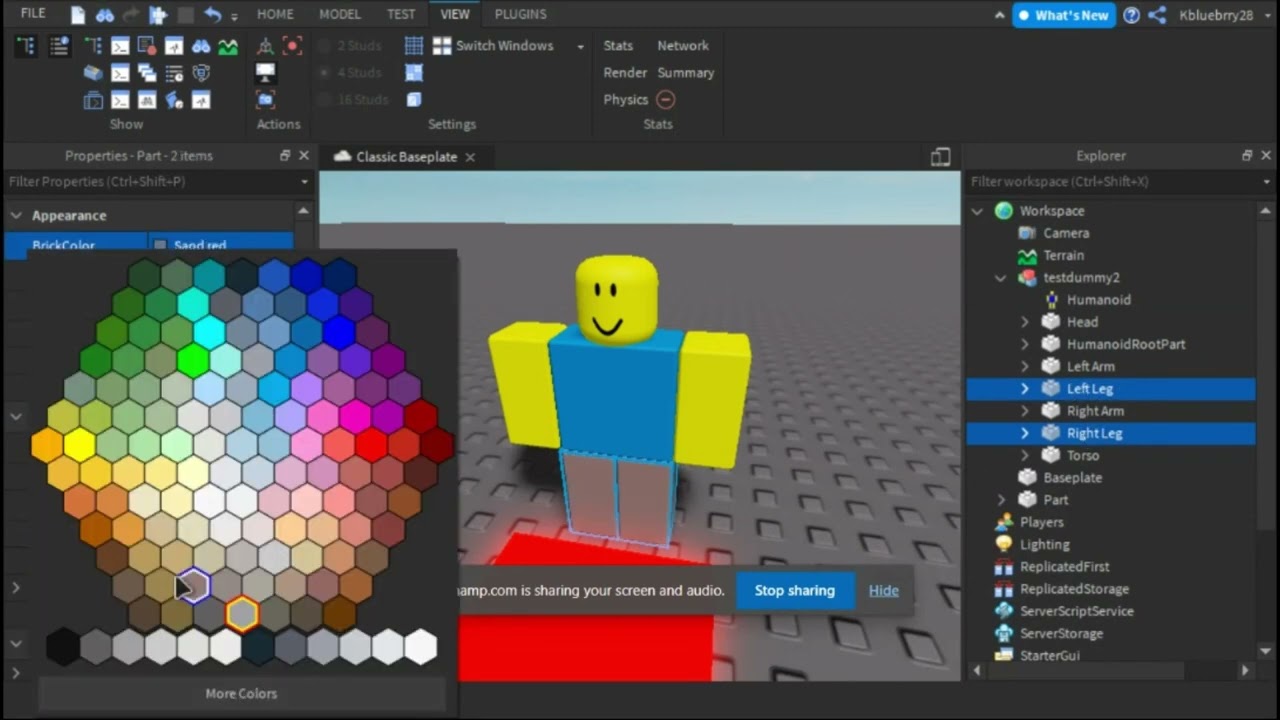


TUTORIAL How To Make A Working Morph In Roblox Studio YouTube . How To Make A Working Morph In Roblox Studio 2022 Version YouTube . How To Make Morphs In Roblox Studio YouTube . TUTORIAL How To Make A Morph In Roblox Studio 2021 YouTube . Roblox How To Make Morph 1 Bin Video Yandex Te Bulundu 564x318 1


How To Make A Morph In Roblox Studio YouTube . How To Make A 3D And 2D Morph In Roblox Studio 2023 YouTube . How To Make A Morph Gui In Roblox Studio YouTube . How To Make A Mesh Morph On Roblox YouTube . How To Make A Character Selection In Roblox Studio Part 2


How To Make A MORPH In Roblox Studio YouTube . How To Make A Animated Morph On Roblox YouTube Hqdefault . Roblox Update How To Morphs In MINOR UPDATE TBR YouTube . HOW TO MORPH YOUR ROBLOX CHARACTER YouTube . Roblox Studio How To Make Morph 1 Bin Video Yandex Te Bulundu 564x318 1