Diving deep into how you can share your Steam game library with loved ones is a hot topic among US gamers. With 87% of gamers regularly engaging with their favorite titles, and many balancing busy lives, finding value and maximizing entertainment is key. This comprehensive guide explores Steam Family Sharing, a fantastic feature allowing you to lend your digital games without buying multiple copies. We'll cover everything from setup and eligibility to restrictions and common troubleshooting, ensuring you can confidently share your gaming adventures and save money. Discover how to enhance your social gaming experience, introduce friends to new titles, and get more mileage out of your purchased games, all while navigating the system's nuances effectively. This month, with popular social and cozy games trending, sharing your library is more appealing than ever. Learn to make the most of your Steam collection.
Can I play my own games while someone else is using my shared Steam library?
No, not simultaneously from the same shared library. If you, the primary account holder, launch any game from your Steam library, the person currently playing one of your shared games will receive a warning and will be prompted to purchase the game or exit within a few minutes. Your access always takes priority.
How many friends or family members can I share my Steam game library with?
You can authorize Steam Family Sharing for up to 5 different Steam accounts and on up to 10 separate devices within a 90-day period. Remember, even with multiple authorized users, only one person can play games from your shared library at any given time.
Are there any types of Steam games that cannot be shared through Family Sharing?
Yes, some games are not shareable. This typically includes games that require a third-party account, key, or subscription (like those needing Ubisoft Connect or a separate launcher), free-to-play titles (as they're already free), and games with specific Digital Rights Management (DRM) restrictions. VAC-enabled games, while technically shareable, carry a significant risk of your account being banned if the borrower cheats.
What happens to my save data and achievements when someone plays my shared games?
When someone plays a game from your shared library, their save data, achievements, and any workshop content they create or use are all tied to *their* individual Steam account. Your personal progress, saves, and achievements remain completely separate and unaffected by their gameplay.
Can a borrower purchase DLC or in-game items for a game they are playing via my shared library?
Yes, a borrower can purchase DLC and in-game items for a shared game. However, these purchases are tied directly to *their* Steam account and cannot be shared with your library or transferred. If they own the base game themselves, they will not get your DLC; they must purchase it.
Is there a way to revoke access to my shared Steam library from a specific computer or user?
Absolutely. You have full control to manage and revoke access at any time. Simply go to your Steam client's settings: navigate to Steam > Settings > Family > Manage Other Computers. From there, you can easily deauthorize any device or account that you no longer wish to share your library with.
Why might I see a "Shared library currently unavailable" message when trying to access a shared game?
This message typically appears if the primary owner of the shared library is currently playing a game from their own library, making the shared library temporarily inaccessible. It can also occur if the sharing account's Steam Guard is not enabled for at least 7 days, or if the device/account authorization has expired or been revoked.
Hey fellow gamers! Ever found yourself wanting to introduce a friend or family member to that amazing game you just finished, but they haven't bought it yet? Or perhaps you're a parent trying to share your vast digital library with your kids without shelling out for duplicate copies. It's a common dilemma in the gaming world, especially for the average US gamer, who, at around 36 years old, balances a job, family, and life responsibilities while still carving out over 10 hours a week for their passion. We value our relaxation, skill-building, and social connections through gaming, but we also value our hard-earned money.
Good news! Valve's Steam platform offers a fantastic solution: Steam Family Sharing. This often-underutilized feature allows you to authorize other Steam accounts to play games from your personal library, giving you more bang for your buck and fostering a stronger gaming community among your circle. This month, with many popular social and cozy games trending, sharing your library is more appealing than ever. However, navigating the ins and outs of game sharing can sometimes feel like a puzzle. What games can you share? What are the limitations? And what happens when someone else is playing your game? Don't worry, you're in the right place.
This comprehensive guide will walk you through everything you need to know about how to share Steam games effectively and stress-free. We'll demystify the process, explain the crucial rules, tackle common pain points, and provide practical solutions so you can enjoy your gaming library with friends and family without a hitch. By the end, you'll be an expert at leveraging Steam Family Sharing, saving money, and spreading the joy of gaming. Let's dive in!
What Exactly is Steam Family Sharing and How Does It Work?
Steam Family Sharing is a feature that allows members of the same household, or even close friends, to play games from each other's Steam libraries without purchasing multiple copies. It's essentially like lending a physical game disc, but in the digital realm. Once activated, another authorized user can access and play most of your games directly from their own Steam account on an authorized computer. This means they get their own achievements, cloud saves, and even workshop content without interfering with your personal progress. It’s a game-changer for budget-conscious gamers and families, aligning perfectly with the desire for value for money and shared experiences that many US gamers, balancing work and life, prioritize.
The core mechanism is quite clever. When you authorize a computer and another Steam account to share your library, that user can install and launch your games. However, there's a crucial rule: only one user can play games from a shared library at any given time. If you decide to jump into a game from your library while someone else is actively playing one of your shared games, they will receive a notification giving them a few minutes to either purchase the game or quit playing. This ensures that the primary account holder always has priority, making it a fair system for everyone involved.
How Do I Set Up Steam Family Sharing For My Account?
Setting up Steam Family Sharing is a straightforward process, designed to be user-friendly even for those who aren't tech experts. It involves authorizing both the other user's account and the computer they'll be using. Here's a step-by-step guide to get you sharing your library in minutes:
Log in to Your Steam Account: First, ensure you are logged into your primary Steam account on the computer that will be sharing its library. This is usually your main gaming PC.
Enable Steam Guard: Steam Guard, Steam's two-factor authentication, must be enabled for your account for at least 7 days. This is a critical security measure. You can enable it via Steam Client > Steam > Settings > Account > "Manage Steam Guard Account Security...".
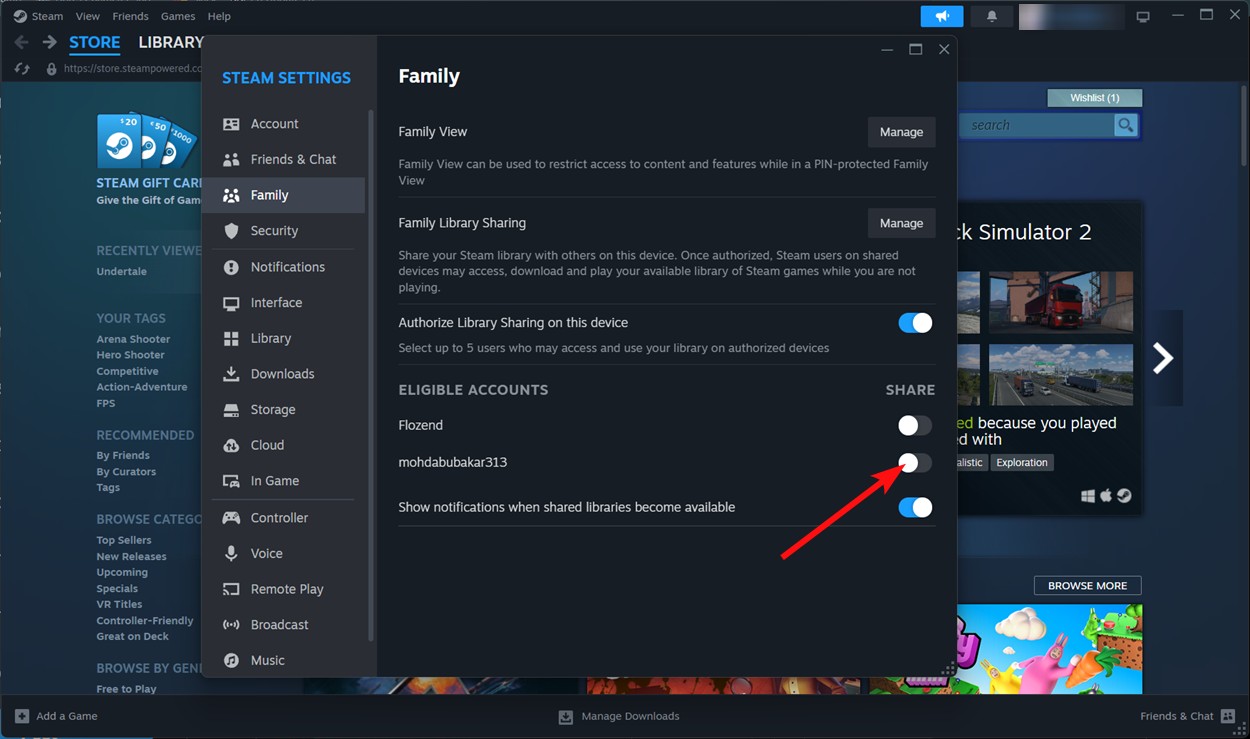
Authorize Family Sharing: Navigate to Steam Client > Steam > Settings > Family. Here, you'll see a section for "Family Library Sharing." Check the box next to "Authorize Library Sharing on this computer."
Select Authorized Accounts: Below the checkbox, you'll see a list of other Steam accounts that have logged into this computer. Simply check the boxes next to the accounts you wish to authorize to share your library. If the desired account isn't listed, that person needs to log into Steam on your computer at least once.
Repeat for Borrower's Computer (Optional but Recommended): For the best experience, the borrower should also log into your Steam account once on *their* computer and follow steps 1-3 to authorize their own PC to access your library. This allows them to manage your shared games directly from their machine without needing access to yours.
Once these steps are complete, the authorized user will see your shared games listed in their Steam library, ready to install and play. It’s that simple, allowing busy gamers to quickly get their family and friends set up without too much fuss.
What Are the Key Limitations of Steam Family Sharing?
While Steam Family Sharing is incredibly convenient, it does come with specific limitations designed to protect publishers and the primary account holder. Understanding these rules is essential to avoid frustration and ensure a smooth sharing experience. Many gamers wonder about these boundaries, especially when balancing their own play with shared access.
One Library, One Player: The most significant limitation is that only one user can access a shared library at any given time. If the borrower is playing a game from your library and you decide to play any game from your own library, the borrower will receive a warning and be kicked off your game after a few minutes. This applies even if you're playing different games.
DRM and Third-Party Games: Not all games are shareable. Titles that require a third-party key, account, or subscription (like games that use Ubisoft Connect, Epic Games Launcher, or a separate online login) are generally not compatible with Family Sharing. Free-to-play games, of course, don't need sharing as they're already free.
DLC and In-Game Purchases: Borrowers can access your DLC for a game only if they don't already own the base game themselves. If they own the base game, they must purchase the DLC separately. In-game items, microtransactions, or any content purchased within a shared game are tied to the *borrower's* account, not yours. This means they cannot be shared or transferred back to your account.
Regional Restrictions: Some games may have regional restrictions, preventing them from being shared or played across different geographical locations, though this is less common for mainstream titles.
Vac Bans: If a borrower cheats or commits fraud while playing your shared games, your account will be VAC banned from those games, and potentially your entire account could be compromised. This makes it crucial to only share with trusted individuals.
Limited Devices: You can authorize Family Sharing on up to 10 devices and with up to 5 accounts within a 90-day period. This cooldown period is important to note if you frequently change devices or sharing partners.
These limitations, while sometimes inconvenient, ensure the system's integrity and fair use, allowing gamers to still enjoy the benefits without undermining game sales.
Can I Play My Own Games While Someone Else is Using My Shared Library?
This is one of the most frequently asked questions about Steam Family Sharing, and the answer comes with a specific caveat. Yes, you, the primary account holder, can always play your own games. However, if an authorized friend or family member is actively playing a game from your shared library, your ability to play *any* game from your library will take precedence. If you launch a game, the borrower will receive a message stating that the library is currently in use and they will have a few minutes to either stop playing or purchase the game themselves. This "primary user always has priority" rule is fundamental to how Family Sharing operates.
This means you cannot simultaneously play games from the same shared library. For example, you can't play Cyberpunk 2077 while your friend plays Stardew Valley from your shared library. You can, however, play a game from your library while your friend plays a game they *own* on their own account. The restriction only applies when both of you are trying to access games that belong to the *same* shared library. This system promotes respectful sharing and ensures the original owner always has priority access to their purchased content, a critical point for adult gamers who value their limited free time.
Are All My Steam Games Eligible for Family Sharing?
While a vast majority of Steam titles are eligible for Family Sharing, it's important to know that not every game can be shared. Generally, most single-player and many multiplayer games that are purely Steam-based will work without issue. However, certain categories of games are typically excluded due to technical or licensing reasons. This is a common point of confusion for gamers looking to maximize their sharing potential.
Games that commonly cannot be shared include:
Games requiring a third-party key or account: Titles that need you to activate a separate key outside of Steam (e.g., for Ubisoft Connect, Rockstar Social Club, or other publishers' launchers) usually cannot be shared because the external license is tied to your primary account.
Games requiring a subscription: Any game that has an ongoing subscription model is generally not shareable, as the subscription is tied to a specific account.
Free-to-play (F2P) games: Since these games are already free, there's no need to share them. Anyone can download and play them directly.
Games with specific DRM: Some games with unique or aggressive Digital Rights Management systems might block Family Sharing functionality.
Games that are VAC-enabled (for cheating concerns): While technically shareable, if a borrower cheats in a VAC-protected game, the lender's account will also receive a VAC ban for that game. Steam's official stance is that VAC-enabled games are not shareable, implicitly suggesting they prefer you don't share them due to the risk.
It’s always a good idea to test sharing a specific game if you're unsure. The borrower will simply not be able to launch it if it's restricted, or it won't appear in their shared library list. This understanding helps gamers manage expectations and avoid setup issues.
What About DLC, In-Game Purchases, and Microtransactions with Shared Games?
The rules around Downloadable Content (DLC) and in-game purchases in a shared library can be a bit nuanced. This is a major concern for gamers who spend on expansions or cosmetics and want to know what gets shared and what doesn't. Let's break it down:
DLC Sharing: If the borrower does NOT own the base game themselves, they will gain access to ALL of your DLC for that game when they play it through your shared library. This is fantastic for giving friends the full experience of a title. However, if the borrower DOES own the base game, they will NOT automatically get your DLC. They would need to purchase the DLC themselves to use it with their own copy of the base game. This system ensures that players who already bought the base game are encouraged to support developers by purchasing their own expansions.
In-Game Purchases and Microtransactions: Any purchases made within a shared game, such as cosmetic items, in-game currency, or battle passes, are always tied to the *borrower's* Steam account. They are not shared with the lender's account and cannot be transferred. This means if your friend buys a new skin in Apex Legends while playing your shared copy, that skin belongs to *their* account forever, even if they later buy the game or stop sharing.
Saves and Achievements: Both local saves and cloud saves, as well as achievements, are always tied to the *borrower's* individual Steam account. This is a great benefit, as it means their progress is separate and secure, allowing for personalized gaming experiences even when sharing a library. No more accidentally overwriting someone else's save file!
Understanding these distinctions helps manage expectations and prevents common frustrations, ensuring that value for money is still maintained for everyone involved.
How to Troubleshoot Common Steam Family Sharing Issues?
Even with a straightforward system, sometimes things don't go as planned. Gamers often face setup issues or unexpected roadblocks. Here are some common problems with Steam Family Sharing and their solutions, designed to get you back to gaming quickly:
1. Games Not Appearing in Borrower's Library:
Ensure Proper Authorization: Double-check that both your computer and the borrower's account (and their computer, if applicable) are authorized in your Steam settings (Steam > Settings > Family).
Check Steam Guard: Confirm that Steam Guard has been enabled on your account for at least 7 days.
Game Eligibility: Remember, not all games are shareable (e.g., third-party DRM, F2P). Verify the specific game you're trying to share isn't in an excluded category.
Relog Steam: Sometimes a simple log out and log back in for both accounts can refresh the library.
2. "Library In Use" Message:
Simultaneous Play: This message means the primary account holder is currently playing a game from the shared library. The borrower must wait until the primary user finishes, or the primary user must exit their game. There's no workaround for this, as it's a core design feature.
3. Performance Issues on Shared Games:
Hardware: Ensure the borrower's computer meets the game's minimum system requirements. Sharing doesn't magically enhance hardware.
Internet Connection: A stable internet connection is always crucial for online games, even when shared.
Local Installation: Make sure the game is installed locally on the borrower's machine, not trying to stream it from your computer (which is not how Family Sharing works).
4. Unable to Authorize a Device/Account:
90-Day Cooldown: If you've recently authorized many devices/accounts, you might be hitting the 90-day cooldown limit for adding new ones (10 devices, 5 accounts).
Temporary Glitch: Restart both Steam clients and try again. Sometimes a server-side issue can cause temporary authorization problems.
Patience and careful checking of settings are often the keys to resolving most Family Sharing issues. For persistent problems, Steam Support is always available.
Is Steam Family Sharing a Secure Way to Share My Game Library?
Security is a paramount concern for any online activity, especially when it comes to sharing your digital assets. For US gamers who invest significant time and money into their Steam libraries, knowing their account is safe is non-negotiable. Steam Family Sharing is generally secure, but its safety largely depends on who you choose to share with. The system itself has built-in safeguards, but user responsibility plays a critical role.
Here's why it's secure and where caution is needed:
Account Isolation: When you share your library, the borrower does NOT gain access to your Steam account credentials. They use their own Steam account to access your games. This means they can't make purchases on your behalf, change your settings, or access your personal information.
VAC Bans and Trust: The biggest security risk comes from the potential for a VAC (Valve Anti-Cheat) ban. If someone you authorize to share your library cheats in a VAC-protected game, *your* account will receive the ban for that game. This is a severe consequence and why Valve strongly advises only sharing with people you implicitly trust, like family members or very close friends. This reinforces the need for responsible sharing, aligning with the community-focused yet safety-conscious nature of many adult gamers.
Device Authorization: You have control over which computers are authorized to access your library. You can deauthorize devices at any time through your Steam settings (Steam > Settings > Family > Manage Other Computers...). This provides a layer of control if a shared device is lost or compromised.
Steam Guard Protection: Requiring Steam Guard for Family Sharing adds an essential layer of two-factor authentication to your account, making it much harder for unauthorized users to gain access even if they somehow got your password.
In essence, Steam Family Sharing is as secure as the people you share with. As long as you only authorize trusted individuals who won't engage in malicious or rule-breaking behavior, your library and account should remain safe. It's a feature built for responsible sharing within a trusted circle.
Conclusion
Steam Family Sharing offers an incredible opportunity for US gamers to expand their horizons, save money, and connect with friends and family over shared gaming experiences. From introducing a new generation to classic titles to letting a buddy try out a game before they buy, the benefits are clear. We've walked through the simple setup process, clarified the important limitations regarding simultaneous play and game eligibility, and tackled those tricky questions about DLC and in-game purchases. We also explored common troubleshooting steps and emphasized the critical importance of sharing only with trusted individuals to keep your account secure. As gaming continues to be a central part of many adults' lives, balancing fun with practicality, features like Family Sharing become invaluable.
By understanding how to effectively use this feature, you can unlock more value from your existing library, foster stronger gaming communities, and introduce your loved ones to new worlds of entertainment, all while managing your time and budget smartly. So go ahead, share the joy! What's your biggest gaming challenge when it comes to sharing or managing your digital library? Comment below!
FAQ Section
Q: Can I share all my Steam games?
A: Most single-player and many multiplayer Steam games can be shared. However, titles requiring third-party accounts/keys, subscriptions, or some specific DRM are generally not shareable. Free-to-play games also don't need sharing.
Q: What happens if I want to play a game while someone is using my shared library?
A: If you, the primary owner, launch any game from your library, the borrower will receive a notice and be given a few minutes to either purchase the game or exit. The primary account always has priority access.
Q: Do shared games include the original owner's save files or achievements?
A: No, borrowers create their own unique save files and earn their own achievements, which are tied to their personal Steam account. Your progress remains separate and unaffected.
Q: Can I share my Steam library with more than one friend at a time?
A: You can authorize up to 5 accounts and 10 devices to access your library. However, only *one* of those authorized users can play a game from your shared library at any given time.
Q: Will my Steam account be at risk if someone cheats on a game I shared?
A: Yes. If a borrower cheats or commits fraud in a VAC-secured game from your shared library, your account will be VAC banned from that game and potentially others. Only share with highly trusted individuals.
Q: Can I remotely deauthorize a device from my shared library?
A: Yes, you can deauthorize any computer that has access to your shared library. Go to Steam > Settings > Family > Manage Other Computers to revoke access at any time.
Steam Family Sharing allows friends and family to play games from your library. Only one user can access a shared library at a time, preventing simultaneous play of the same game. Some games, especially those requiring third-party keys or subscriptions, may not be shareable. Shared games include achievements and cloud saves for the borrower. The feature is perfect for saving money and exploring new titles. Ensure Steam Guard is enabled for sharing.
35
:max_bytes(150000):strip_icc()/A2-ShareGamesonSteam-annotated-a1ba8f230df443db94a7be5654e92cb9.jpg)


How To Share Games On Steam 2026 Steam Family YouTube . How Can You Share Steam Games With Your Friends Easily A2 Annotated . How To Share Games On Steam With Steam Family 2026 Guide YouTube . How Can You Share Steam Games With Your Friends Easily Hero . How Can You Share Steam Games With Your Friends Easily


Como Jogos No Steam Jogos 2026 How Share Games Steam . January 2026 S Top Selling New Steam Games Revealed 08418405 04a2 47eb B48b 1500x843 . Steam March 2026 Client Update Adds Hardware Specs To User Reviews Steam Client Mar 2026 . How Can You Share Steam Games With Your Friends Easily . How Can You Share Steam Games With Your Friends Easily




How Can You Share Steam Games With Your Friends Easily How To Share Steam Games With Family And Friends 4.webp. Steam Next Fest February 2026 The 22 Best Game Demos The Best Steam Next Fest Demos 2026 The Punished Backlog Order 2 768x415 . How To Share Games Using Steam Family Sharing Beebom All Games Or The Ones I Choose . How To Share Games Using Steam Family Sharing Beebom Share Library . How Can You Share Steam Games With Your Friends Easily Social Media Share Ifaz .webp


How To Share Steam Games And Play Together 2026 Step By Step YouTube . How Can You Share Steam Games With Your Friends Easily How To Share Games On Steam . How To Share Steam Games The Best Guide How To Share Steam Games . How To Share Games On Steam 2026 Step By Step Guide YouTube . How Can You Share Steam Games With Your Friends Easily Steam Share Games




Simple Ways To Share Steam Games With Family And Friends 7 Steps Share Steam Games With Family And Friends Step 7 . Simple Ways To Share Steam Games With Family And Friends 7 Steps V4 460px Share Steam Games With Family And Friends Step 2 . How Can You Share Steam Games With Your Friends Easily . Can You Share Steam Games With Family If Living Apart LevelUpTalk Sharing Steam Games Remotely 01 28 2026 318813a5 F43d 4623 8349. How Can You Share Steam Games With Your Friends Easily
:max_bytes(150000):strip_icc()/002-share-games-on-steam-4163650-228c5d3f36c141afa7552f36965e57c5.jpg)




How Can You Share Steam Games With Your Friends Easily 002 Share Games On Steam 4163650 . How Can You Share Steam Games With Your Friends Easily . How Can You Share Steam Games With Your Friends Easily . How To Share Games On Steam 2026 Step By Step YouTube . Steam Starts 2026 With 4 New FREE Games No Strings Attached Steam Logo In Forest




How To Share Games Using Steam Family Sharing Beebom Family Sharing Option Settings . Valve Announces Steam Families Users Can Share And Play Steam Steam Families 03 19 24 1 1024x576 . How Can You Share Steam Games With Your Friends Easily Steam Force Other To Quit Game In Shared Account How Steam Handles Game Conflicts In Family Sharing 1536x864 . How Can You Share Steam Games With Your Friends Easily Steam Sharing Games With Friends . New Steam Features For 2026 Steam Features 2026 What S New Banner.webp